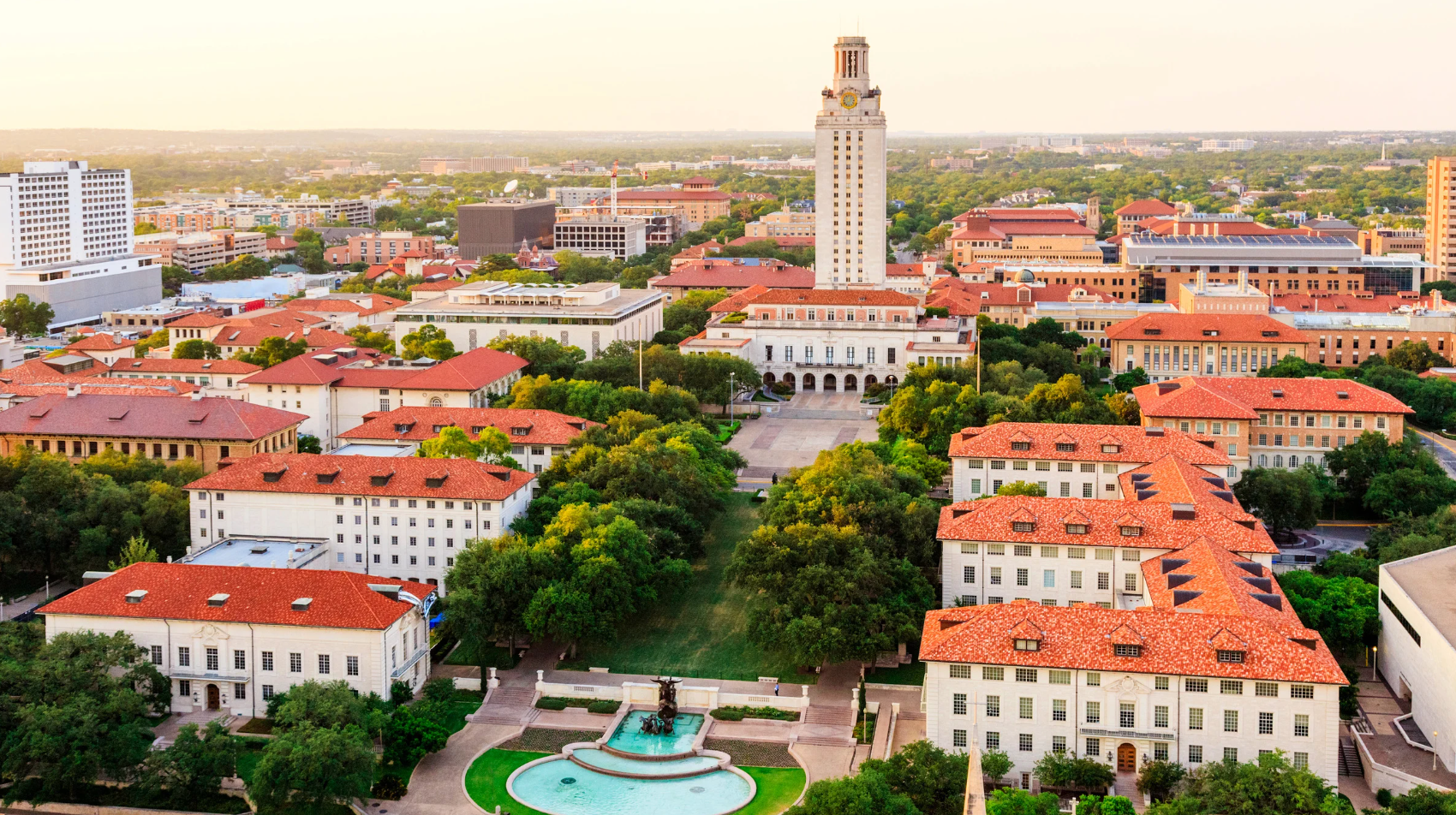
Walk onto the sprawling UT Austin campus, and you’ll immediately feel it – that unmistakable energy buzzing through the air. Since opening its doors in the late nineteenth century, this institution has grown from a small collection of buildings into an intellectual powerhouse where students and faculty push boundaries daily. Orange flags wave against the Texas sky as students hurry between classes, professors debate groundbreaking research, and the iconic UT Tower stands tall above it all.
Brains Behind the Orange
Want options? UT’s colleges and schools offer degree programs that’ll make your head spin. One day you might catch a future NASA engineer programming robots in the Cockrell School, while across campus, a budding filmmaker edits their first documentary. Nobel Prize winners and Pulitzer recipients don’t live in some ivory tower here – they’re in classrooms actually teaching undergrads.
McCombs business students pitch startups that occasionally land actual funding before graduation. Engineering labs crank out patents that companies battle to license. Natural Sciences researchers tackle everything from cancer treatments to climate solutions. When employers see “University of Texas” on a resume, they know they’re getting someone who can think critically, not someone who memorized textbooks.
Big Money, Bigger Discoveries
UT invests heavily in research – it’s how the university solves real-world problems. Their supercomputers crunch numbers so massive your laptop would burst into flames attempting the same calculations. When pharmaceutical companies need to model new drug interactions or meteorologists track hurricane patterns, they call UT’s Texas Advanced Computing Center.
Geologists at the Jackson School don’t stay buried in textbooks; they advise governments worldwide about earthquake risks and energy resources. The newer Dell Medical School skips outdated approaches, reimagining how doctors learn and patients receive care. Undergrads don’t watch from the sidelines either – many contribute to published research before they’ve even taken senior photos. When disasters strike or diseases spread, UT labs often help develop solutions that save lives.
Austin’s Cultural Engine
UT and Austin feed off each other’s energy like old friends. Wander through the Blanton Museum to see masterpieces that would make New York galleries jealous. Duck into the Harry Ransom Center where the world’s first photograph sits alongside original manuscripts from Tennessee Williams and Gabriel García Márquez. Need live entertainment? The Performing Arts Center hosts everything from symphony orchestras to avant-garde theater that’ll leave you talking for weeks.
Saturday game days transform Austin entirely. Sidewalks fill with orange shirts, local bars overflow with alumni, and Darrell K Royal-Texas Memorial Stadium roars with thousands of voices. The “Hook ’em Horns” hand signal shows up everywhere from business meetings to wedding photos. Sports here aren’t separate from campus culture – they’re woven into the university’s DNA, connecting grandparents who attended decades ago with freshmen who arrived last fall.
More Than Degrees
College transcripts tell half the story. UT graduates walk away with something else – an ability to lead when nobody else steps up. Elite programs like Plan II Honors and Forty Acres Scholars don’t appear on job applications, but they shape how alumni approach complex problems. Austin’s booming tech scene, government agencies, and creative startups provide real-world training grounds where classroom theories meet Monday morning realities.
Walk around campus and you’ll hear dozens of languages and see students from every conceivable background. Support centers help first-generation college students navigate university life, while health services keep minds and bodies functioning through exam weeks. Student clubs range from competitive robotics teams to Bollywood dance troupes to investment groups managing portfolios.
UT’s motto – “What starts here changes the world” – might sound lofty until you look at what graduates actually accomplish. They launch startups in Silicon Valley, lead medical breakthroughs, craft legislation, create award-winning films, and build sustainable communities. During moments when society faces its greatest challenges, UT alumni repeatedly step forward with solutions. The orange tower might be the university’s most recognizable symbol, but its greatest monuments are the lives and work of those who learned within its classrooms.